 DentalClinics
Dental CDSS
One radiograph, several readings, shown side by side. We attribute every finding to the platform that produced it, we point out where they agree and where they differ, and we stop there.
What it does
One image goes to several platforms
A bitewing, a periapical or a panoramic radiograph is sent to the platforms you selected, in the same exchange.
Each reading comes back attributed
Every finding carries the name of the platform that produced it and the version of the model that ran. Nothing is merged, rewritten or reworded.
Agreement and disagreement are stated
Findings reported by more than one platform are marked as such. Findings reported by only one are marked as such. Both are shown in full.
The clinician reads and decides
There is no verdict at the end of this page. The diagnosis is the practitioner's, and it always was.
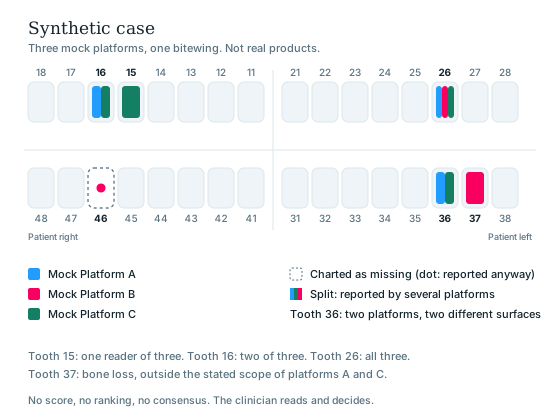
What this deliberately does not do. No confidence score. No priority level. No ranking of platforms against each other. No consensus finding, no arbitration, no combined summary.
Why. Each platform holds its own regulatory position for its own stated indication. A synthesis on top of them would be a new clinical output that none of those authorisations covers — a separate device, with its own regulatory path. We have chosen not to produce one.
See it on a synthetic case
Demo Synthetic case · three mock readers built to disagree · no image analysed, no vendor connected.
What a disagreement means
Different AI systems reading the same radiograph may report different findings. A tool that hid that behind a single averaged answer would be throwing away information the clinician should see. Showing the disagreement is the product.

Retention
The same as everywhere else here: the image is held in memory for the duration of the request and released when it closes. Comparing several readings does not mean storing them. Nothing is written to disk, including the comparison itself.
This is a decision-support display, not a diagnostic device. It produces no clinical finding of its own and holds no regulatory clearance. Each platform's status belongs to its own vendor.